
What Are uPVC Casement Windows?
uPVC casement windows are windows made from rigid, unplasticised PVC profiles in which each opening pane, or casement, is hinged to the frame and swings outward. Side-hung casements open like a door; top-hung casements tilt out from the top and are common above a fixed pane. They are the standard window on most Kent homes built or re-windowed since the 1980s, from bungalows in Herne Bay and Birchington to the estates of Kings Hill, Walderslade and Ashford.
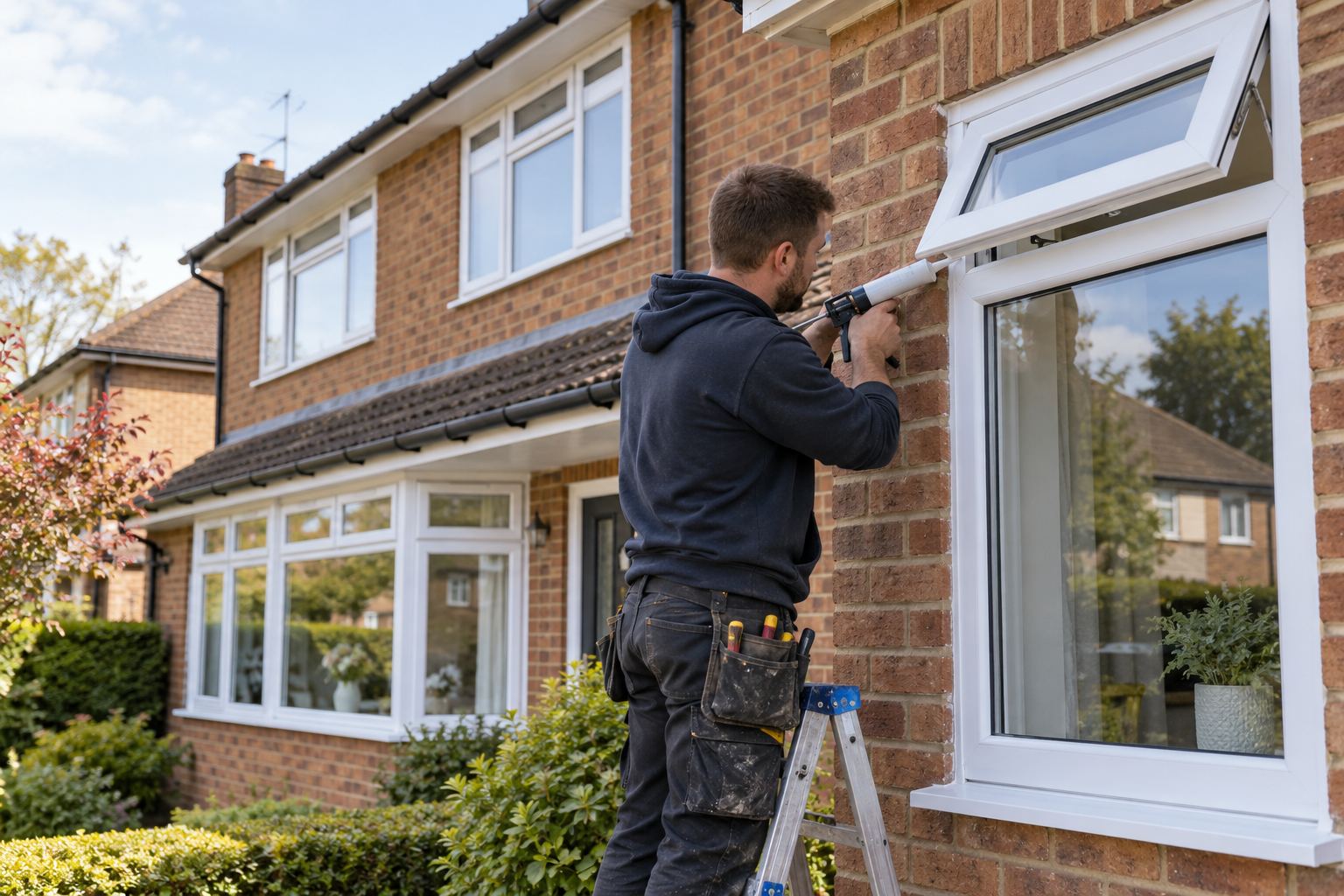
Modern casements are a long way from the chunky white frames of thirty years ago. Profiles come in chamfered, sculptured and flush-sash styles; colours run from white and cream to anthracite grey, black and woodgrain foils; and multi-chamber frames with steel reinforcement carry double or triple glazed units with good thermal ratings.
Signs It Is Time for New uPVC Casements
- Friction hinges that are stiff, noisy or no longer hold the casement open in a breeze
- Espagnolette locks that will only engage if you push the casement hard against the frame
- Frames that have discoloured, chalked or lost their gloss, particularly on south-facing elevations
- Wet window boards after heavy rain, pointing to failed drainage slots or perished gaskets
- Openers too small for the room, or none at all on a window that should provide an escape route
- Salt-corroded hinges and keeps on homes near the seafront at Whitstable, Deal or Folkestone
uPVC Casement Options Explained
- Chamfered profile. The flattest, most economical frame with a bevelled edge, suited to modern estate houses.
- Sculptured profile. A rounded, ovolo-shaped frame that softens the look and sits better on older houses.
- Flush sash. The casement closes level with the outer frame, echoing a traditional timber window.
- Colours and foils. Grey, black and woodgrain finishes are foiled or sprayed; many are available on one face only, leaving white inside.
- Opening arrangements. Side-hung, top-hung, fixed lights and fire-escape hinges can be mixed within one frame. Easy-clean hinges let you reach the outer glass from inside.
What to Include When Asking for a Quote
List each window and say how it opens today and how you would like it to open. Many homeowners want top openers above fixed glass for ventilation, or a larger side-hung opener in a bedroom that must meet escape requirements; getting this right on paper is far easier than changing it after manufacture. Say which windows are over a kitchen worktop or bath, where the handle position and a restrictor matter.
Choose a profile style and colour before the survey if you can, or ask the installer to bring samples. State whether you want the colour on the outside only or on both faces, and whether you need matching trims, cills and cloaking pieces. If you live near the coast, ask what grade of hinge and lock the firm uses, since standard steel friction stays can rust within a few years in salty air.
A good quote gives the profile brand and system, the frame depth, the glass specification and the whole-window energy rating, plus the lock type and whether it meets PAS 24 security testing. It should say whether new internal window boards and external cills are included and how the old frames will be removed and disposed of.
How Much Do uPVC Casement Windows Cost?
| Job size | Typical cost |
|---|---|
| One small white casement, such as a bathroom or landing window | £300 – £700 |
| Four to six windows, such as the rear of a semi or a bungalow front | £2,000 – £4,500 |
| A whole semi or bungalow in coloured or foiled frames | £4,500 – £6,800+ |
These are guide figures only. Flush-sash profiles, colours on both faces, triple glazing and larger openings all push prices up. Check whether VAT, disposal and new cills and boards are included.
The Installation Process: What to Expect
- Survey and measure. Each opening is measured and checked for square, and the opening layout agreed window by window.
- Order. Frames are made to measure, typically over three to five weeks, with colours sometimes taking longer.
- Removal. The old casement is taken out carefully to keep damage to the plaster and brick to a minimum.
- Fitting. The new frame is packed, fixed and sealed, glazed, and fitted with cill and trims.
- Finishing. Internal gaps are foamed and trimmed, hinges and locks adjusted, and trickle vents demonstrated.
Planning Permission and Building Regulations
Replacing casements with similar-looking uPVC casements on a house is usually permitted development. Where the house is in a conservation area with an Article 4 direction, or is listed, replacing timber with uPVC may not be allowed. Flats and maisonettes do not have the same permitted development rights, so check with the council and the freeholder.
Every replacement window must meet the Building Regulations for energy efficiency, ventilation, safety glazing and means of escape. First-floor bedroom windows usually need an opening large enough to escape through. An installer registered with a competent person scheme can self-certify the work; the Planning Portal's building regulations guidance on windows sets out the requirements.
How to Choose a uPVC Casement Installer
- Which profile system do you use, and who fabricates the frames?
- What reinforcement goes into larger frames and coloured profiles?
- Are the locks and hinges tested to PAS 24, and are they suitable for a coastal home?
- Which windows will have escape hinges, and how large will the clear opening be?
- Are you a member of a competent person scheme, and will you register the work?
- What do your frame, glass and workmanship guarantees cover, and for how long?
Frequently Asked Questions
How long do uPVC casement windows last?
Well-made uPVC frames commonly last twenty-five to thirty-five years. Hinges, handles and gaskets wear sooner and can be replaced separately, which extends the life of the window.
Are grey uPVC casements more expensive than white?
Usually, yes. Coloured and foiled profiles typically cost more than white, and colour on both faces costs more again. The difference varies by manufacturer, so ask each installer to price both.
Can uPVC casements be fitted without damaging the inside walls?
Careful installers remove old frames with minimal disturbance, but some plaster at the reveals may crack or need patching. Ask whether making good is included and how far it extends.
Do uPVC casement windows need trickle vents?
Replacement windows should not reduce a room's ventilation below what it had before, so trickle vents are commonly fitted where the old windows had them or where the room lacks other background ventilation.