
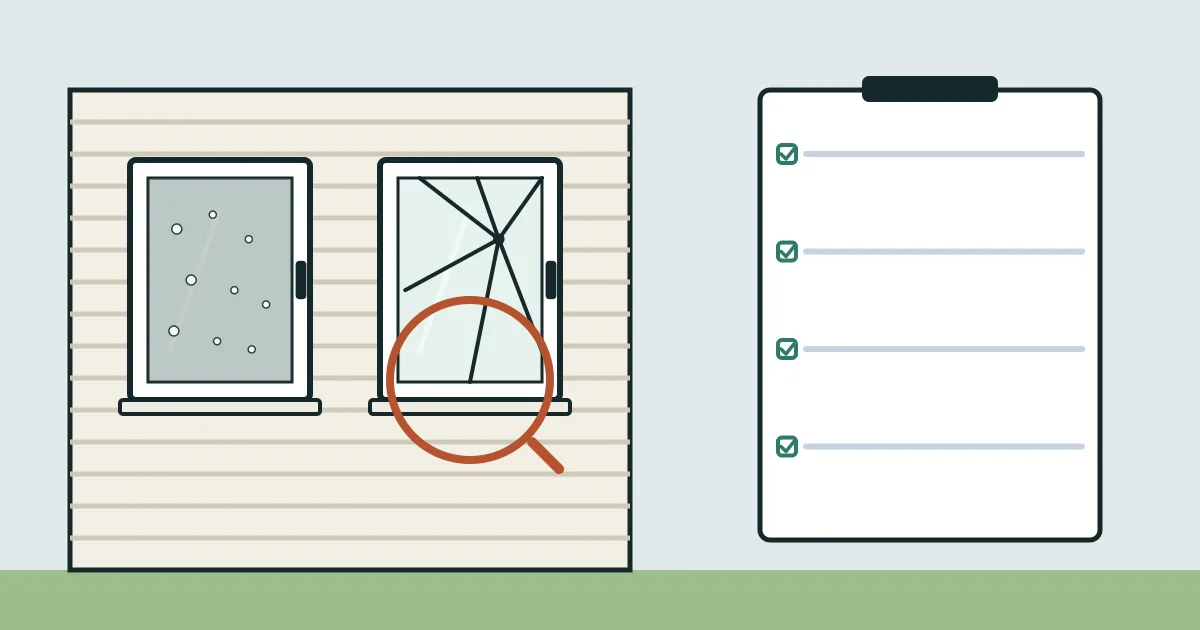
Windows rarely fail all at once. The usual pattern is a draught here, a damp patch there, one pane that will not clear. Work through the signs below with a torch on a cold, bright morning, because condensation, draughts and misting show up best then. Several of these problems can be fixed without replacing the whole window, and the checklist says which.
Signs in the glass
- Fog, droplets or a milky haze between the two panes. The seal on that unit has failed. This is usually a double glazing replacement job for the unit alone, not the whole window.
- Condensation on the inside face that comes back every morning. This points to humidity in the room as much as the window, and a new frame may not cure it.
- Cracks or chips in the glass, or a pane that has gone cloudy at the edge.
- Rooms that stay cold near the windows even with the heating on.
Signs in the frame
- uPVC that has yellowed, gone chalky or cracked at the corner joints.
- Frames that have bowed or twisted, so the sash no longer sits flat.
- Soft or crumbling timber at the bottom rail or the cill, often found by pressing a screwdriver in. On sashes this may mean the box frame is rotting.
- Paint lifting from timber every spring, or sashes that swell and stick in wet weather.
- Black mould along the reveals each winter.
Signs in the opening and closing
- Handles that turn without locking, or openers that have dropped and scrape the frame. A uPVC casement like this may need new hinges, not a new window.
- A whistle or a cold draught round the frame on stormy nights, or curtains that move with the window closed.
- Sashes that will not stay up, or cords that have snapped. On a sash window the cost of re-cording is usually far lower than the price of new windows, and our sash window page explains the options.
- Hardware rusted by salt air on a seafront or clifftop house.
What can be repaired and what usually cannot
Common window problems and the usual fix
| Problem | Often fixable by | More likely to need replacement |
|---|---|---|
| Misted unit | New sealed unit in the same frame | Frame is warped or the unit cannot be refitted |
| Draught round the opener | New gasket or hinge adjustment | Frame has twisted |
| Dropped or sticking opener | New hinges or friction stays | Frame or profile is worn |
| Snapped sash cord | Re-cording the sash | Box frame is rotten |
| Soft timber at the cill | Localised timber repair | Rot has spread through the frame |
| Yellowed or cracked uPVC | Rarely | Usually replacement |
Signs specific to Kent
On the Thanet, Dover and north Kent coasts, rusted hardware and failing seals are common because of salt in the air. In the Weald and the Medway valley, damp winters make condensation and timber rot more likely. And across the estates of Medway, Dartford, Ashford and Sittingbourne, first-generation uPVC from the 1980s and 1990s is now reaching the end of its useful life, so failing seals and sagging hinges are the typical complaint.
Take photographs of every problem, inside and out, with a coin or ruler for scale. Showing an installer what is wrong, rather than just describing it, makes quotes quicker and more accurate.
If you are leaning towards replacing only the glass, read our guide to misted and failed double glazing, and see the double glazing replacement price guide for costs.
How to check your windows for replacement signs
- Choose a cold, bright morning
Condensation, misting and draughts show up best when it is cold outside and the heating is on.
- Check the glass
Look for fog or droplets between the panes and for cracks or cloudy edges. Note which panes are affected.
- Check the frames
Press a screwdriver into timber at the bottom rail and cill, and look for yellowed, bowed or cracked uPVC.
- Test every opener
Open and close each window, check the handle locks, and feel for draughts with the back of your hand.
- Photograph and list what you find
Take clear pictures and note the room, the window and the problem, ready for an installer's survey.
Frequently asked questions
How do I know if my windows need replacing or just repairing?
A failed seal, a dropped hinge or a snapped sash cord can usually be fixed on their own. Warped frames, widespread rot or yellowed, brittle uPVC more often mean replacement.
Why is there moisture between my double glazing panes?
The seal around the sealed unit has failed and let in damp air. The unit cannot be dried out and normally needs replacing, though the frame may be fine.
Do draughty windows always need replacing?
Not always. A worn gasket or a sagging hinge can cause a draught, and both can be replaced for far less than a new window.
How long do uPVC windows last in Kent?
It varies with quality, exposure and upkeep. Many last decades, but first-generation frames and coastal hardware often show problems sooner.
Ready to talk to a double glazing replacement specialist?
Get Free Quotes →