
What Are Sash Windows?
Sash windows are windows in which glazed frames, called sashes, slide vertically past each other within a box frame. In traditional timber sashes the weight of each sash is balanced by cast-iron or lead weights hanging on cords inside the box, so the window stays wherever you leave it. Kent has an exceptional stock of them: the Georgian streets of Canterbury, Faversham, Sandwich and Rochester, the Regency terraces of Ramsgate and Margate, the naval and garrison houses of Chatham and Deal, and the Victorian villas of Tunbridge Wells and Folkestone.
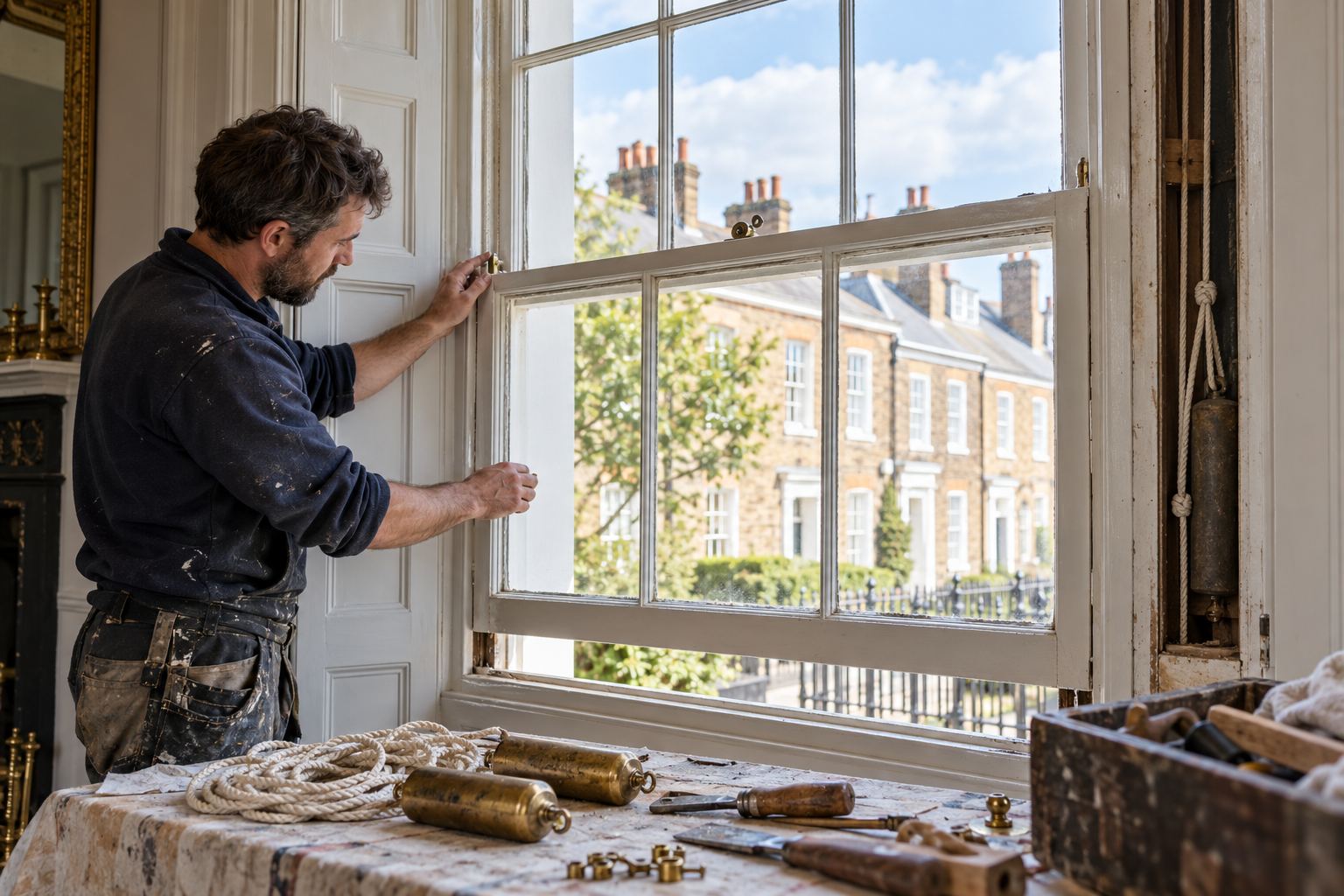
For owners, the job ranges widely. Some want to overhaul original sashes that have simply been neglected. Some want new double glazed timber sashes that look original. Others want the low maintenance of uPVC vertical sliders, or to reinstate sashes on a house that lost them to casements in the 1970s.
Signs Your Sash Windows Need Attention
- A snapped sash cord, leaving the top sash sagging or the bottom sash propped on a book
- Gaps at the meeting rails and along the staff beads that whistle in an onshore wind
- A crumbling cill or bottom rail, often worst on elevations facing the sea or the prevailing weather
- Sashes painted or swollen shut so that only one of them moves, or neither does
- Loose or missing putty and cracked panes in the upper sash where it is hard to reach
- A uPVC slider whose spiral balances have weakened, so the sash drops as soon as you let go
Sash Window Options Explained
- Overhaul and draught-proofing. Sashes are taken out, re-corded, repaired with spliced timber where needed, fitted with brush seals and re-hung. Original glass is kept.
- Replacement sashes in the existing box. New double glazed timber sashes are made to fit sound box frames, keeping the pulleys and weights.
- Complete new timber sash windows. A new box frame and sashes, typically in engineered softwood or hardwood with slim double glazing and either weights or spiral balances.
- uPVC vertical sliders. uPVC sashes on spring balances, often with tilt-in sashes for cleaning. Less upkeep and lower cost, but heavier sightlines than timber.
- Secondary glazing. A discreet inner pane fitted inside original sashes, often the preferred option for listed buildings where the sashes must be kept.
What to Include When Asking for a Quote
Say first whether the sashes are original and whether you would like to keep them if possible. For each window, describe which sashes move, which are stuck, whether any cords have broken and where the timber feels soft. A close-up photograph of the cill and the bottom corners of the lower sash, where rot almost always starts, tells a specialist more than a wide shot of the house.
Record the glazing pattern of each window (two-over-two, six-over-six and so on), whether the upper sashes have horns, and whether there is old hand-made glass with ripples or bubbles you want to keep. Mention internal shutters, panelled linings or window seats, because they affect how the box frame can be removed. On Kent's many listed and conservation-area streets, say what you know about the property's status, as this determines whether replacement is even an option.
An overhaul quote should break down, window by window, the cords, pulleys, timber repairs, draught-proofing and redecoration. A replacement quote should state the frame material, the balancing method, the glazing unit thickness, whether horns and period mouldings are included, and whether the existing box frames are being kept. Ask how the internal plaster and linings will be protected or repaired.
How Much Do Sash Windows Cost?
| Job size | Typical cost |
|---|---|
| One uPVC vertical slider, or a full overhaul of one timber sash | £950 – £2,200 |
| Front of a terrace in uPVC, or two or three new timber sashes | £2,200 – £7,500 |
| Whole house of double glazed timber box sash windows | £7,500 – £16,500+ |
These are guide figures, not quotations. Hardwood, slimline heritage units, arched heads, large sashes and scaffolding on three-storey townhouses all add cost. Confirm whether decoration and VAT are included.
The Sash Window Process: What to Expect
- Condition survey. Each window is inspected and a recommendation given for overhaul, new sashes or full replacement.
- Consents. For listed buildings and Article 4 areas, drawings and specifications are prepared for the council.
- Workshop joinery. Timber sashes and boxes are made to measure, usually over several weeks. uPVC sliders are fabricated to size.
- On site. Overhauls are often done one window at a time with a temporary board in place. Replacements are removed and new frames fitted, weighted and balanced.
- Finishing. Beads and linings are refitted, the windows decorated if agreed, and every sash checked for smooth running and secure locking.
Planning Permission and Building Regulations
On an unlisted house, replacing sashes with new sashes of similar appearance is normally permitted development. Replacing timber with uPVC, or sashes with casements, may be controlled by an Article 4 direction, and many Kent conservation areas, from Faversham to Tunbridge Wells, have one. Any work affecting the character of a listed building requires listed building consent, and councils usually favour repair over replacement. Historic England's guidance on traditional windows is widely used by conservation officers.
New sash windows must meet the Building Regulations and can be self-certified by a competent person scheme installer. Overhaul, re-cording and draught-proofing are repairs and do not need certification. Ask whether any upstairs sash is expected to be an escape window, as some sash designs give a limited clear opening.
How to Choose a Sash Window Specialist
- Do you carry out overhauls as well as replacements, and which would you recommend for my windows?
- Will you keep the existing box frames, pulleys and weights?
- How thick will the glazing unit and the glazing bars be?
- Can you match the horns, mouldings and pane pattern of the originals?
- Have you worked on listed buildings or in Kent conservation areas, and can I see examples?
- What paint system do you use, and how often will the windows need redecorating?
Frequently Asked Questions
Is it better to repair or replace old sash windows?
If the timber is largely sound, an overhaul with new cords and draught-proofing is usually cheaper and keeps the original character. Replacement makes sense where rot is widespread or the sashes have been badly altered.
Can timber sash windows be double glazed?
Yes. New timber sashes can take slim double glazed units, with heavier weights or stronger balances to suit. On listed buildings, the council decides whether double glazing is acceptable.
Do uPVC sash windows look like timber?
Better-quality uPVC sliders with woodgrain foils, run-through horns and slim sections can look convincing from the street, but they are usually bulkier than timber when seen up close.
How often do sash cords need replacing?
Cotton or waxed sash cords typically last many years, but they fray at the pulley over time. When one breaks, it is usually worth re-cording the whole window at the same visit.