
About Kent Windows
Most window projects begin with a single irritation: a bedroom that never warms up, a sealed unit that has turned milky or a bay that lets the rain in when the wind comes from the south-west. Kent Windows gives you one place to describe that job and put it in front of independent installers who work near you. One online enquiry can bring up to four quotations, depending on who is available. The service is free for homeowners, and whether you take any quote further is entirely your decision.
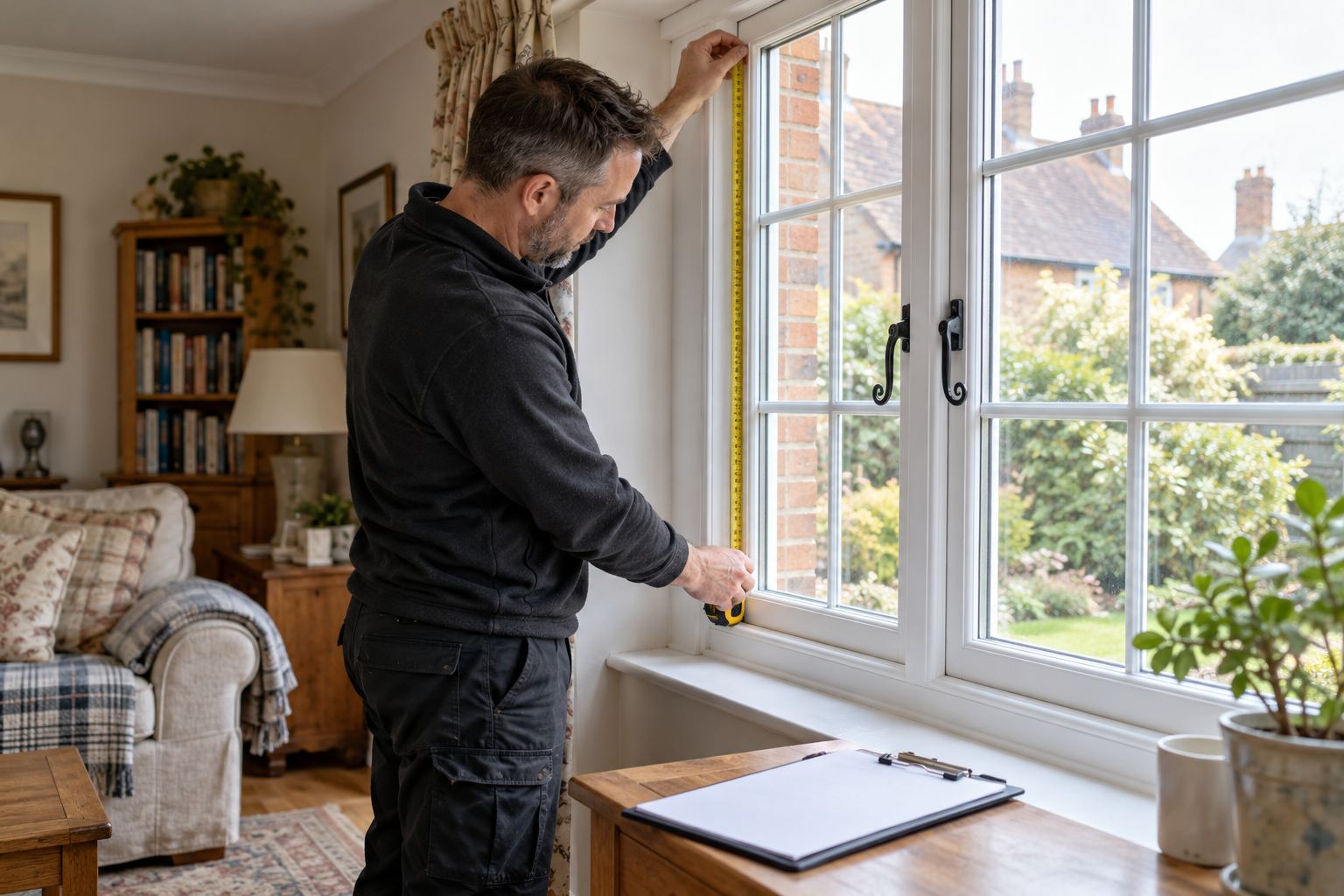
Where Our Role Starts and Stops
We make the introduction. The firm that responds is responsible for everything after that: looking at the windows, recommending what should be done and setting its own price. We have no factory, no fitting teams and no installers on our payroll. Once you choose a business, the order, deposit, payment stages and guarantees are agreed between you and that firm.
That distinction matters most on the day the old frames come out. A timber sub-frame that turns out to be rotten, a lintel that has sagged over a Victorian bay or brickwork that crumbles at the reveal will all need a decision there and then. Ask your installer to put any extra work and its price in writing before you agree to it.
Covering All of Kent
Enquiries come from right across the county: Dartford, Swanley and Gravesend in the north-west; Rochester, Chatham, Gillingham and the Hoo Peninsula; Sittingbourne, Sheerness and the Isle of Sheppey; Maidstone, Tonbridge, Sevenoaks and Tunbridge Wells; Ashford, Tenterden and the Weald villages; Canterbury, Whitstable and Herne Bay; Margate, Ramsgate and Broadstairs; and Dover, Deal, Folkestone, Hythe and Romney Marsh. Each installer decides which areas it covers, so a Kent postcode does not guarantee four replies.
Practical details can decide whether a firm takes a job on. Parking is tight on the terraced streets of Chatham, Gillingham and central Margate. Some Weald cottages sit down narrow lanes a long van cannot turn in. Seafront flats in Folkestone or Herne Bay may need the managing agent's approval and a plan for lifting frames to upper floors. Mentioning these things in your enquiry helps firms respond quickly.
Six Types of Window Work
The site covers double glazing replacement, uPVC casement windows, bay windows, cottage style windows, tilt and turn windows and sash windows. They overlap, but each involves its own questions. Casements are mostly about profile, colour and which panes open. Bays are about structure. Cottage windows are about glazing bars and proportion. Tilt and turn windows are about opening space inside the room and whether the window doubles as a fire escape. Sashes are about balances, box frames and heritage detail.
Double glazing replacement can be as small as one new sealed unit in a frame that is otherwise fine, so say if you would like someone to look at that option before committing to new windows. For a bay, mention cracks in the brickwork above or a leaking bay roof. For a loft room, say whether the window needs to act as an escape route.
Older Kent houses can need more than a like-for-like order. A sash may be worth repairing if its box frame is sound; a cottage casement may need a timber profile and bar layout that sits comfortably with the building; a two-storey bay needs a support plan before removal. The person who surveys the house should explain these choices in plain terms and put the chosen specification in the quote.
Checking the Firm You Choose
Businesses joining the network are asked for insurance details and references. That is a starting point, not a promise about the quality of their work. Ask to see current insurance documents and photographs or addresses of recent similar jobs, especially for structural bays, timber sashes or work on listed or conservation-area houses.
Find out how the installation will be certified. Most replacement windows are registered through a competent person scheme, and the government's guide to competent person schemes explains how that works. Check the firm's registration with the scheme itself rather than trusting a logo on the quotation.
Before paying a deposit, read the written specification, the payment schedule, the cancellation rights and what happens if manufacture runs late. Ask who to call if a unit mists or a hinge fails later, and how long the guarantees on frames, sealed units, hardware and workmanship each last. Some installers offer insurance-backed deposit or guarantee cover; ask exactly what it includes.
Start With the Symptom, Not the Product
You might know a window lets in a draught without knowing whether the gasket, hinge or frame is to blame. Describe what happens rather than trying to diagnose it. For misting, say whether the moisture is inside the unit. For timber windows, point out soft wood or open joints. For coastal homes, mention rusted hardware. The visiting installer should work out what is needed and explain the options before you commit.
Sending an Enquiry
You do not need exact sizes. A count of the windows, the rooms they are in, what the frames are made of now and what is bothering you is plenty to start with. Add your postcode and the best way to contact you, and independent firms that cover your area can decide whether to get in touch.