
What Are Tilt and Turn Windows?
Tilt and turn windows are inward-opening windows with a single handle that controls two movements: turn the handle one way and the top of the sash tilts inward a few inches for ventilation; turn it further and the sash swings fully into the room on side hinges. They originated in Germany and are widely used across Europe, and in Kent they have become a popular choice for flats in the redeveloped waterfronts of Chatham, Gravesend and Folkestone, loft conversions in Tunbridge Wells and Sevenoaks, and upstairs rooms where outside cleaning is otherwise difficult.
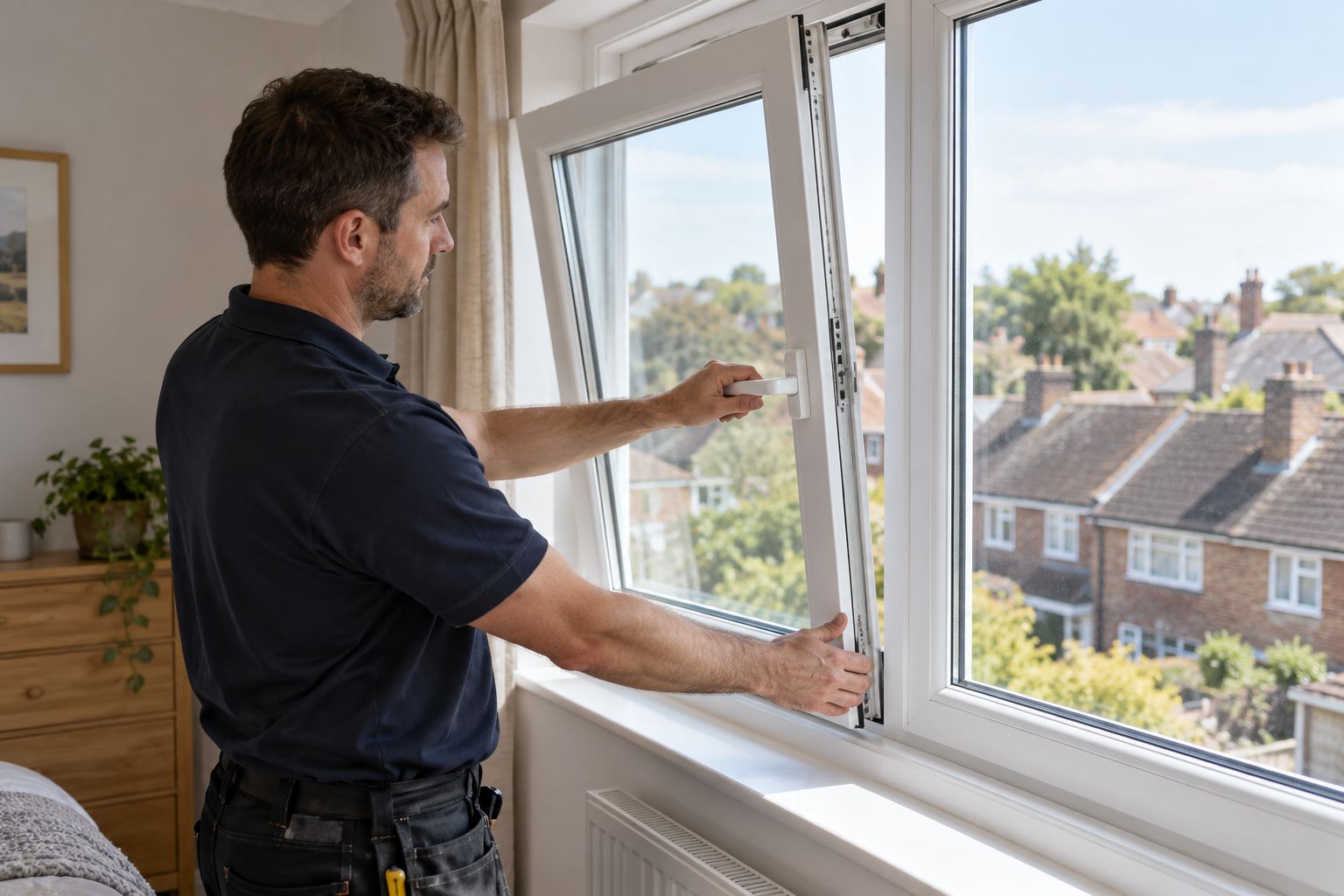
Because the sash opens inward, you can clean both sides of the glass from inside, and the fully open position gives a large clear opening that often suits escape requirements. The trade-off is that you need clear space inside the room for the sash to swing, so blinds, curtains and furniture near the window need planning.
Signs Tilt and Turn Windows Would Suit You
- Upstairs or high-level windows you cannot clean from outside without a ladder or window cleaner
- A loft conversion or second-floor room that needs an escape window with a large clear opening
- A flat where outward-opening casements overhang a walkway or balcony
- Rooms where you want secure night-time ventilation without leaving a casement swinging open
- Existing tilt and turn windows whose gearing is worn, so the sash drops or catches when changing mode
- A wish for a wide, uninterrupted view without a central mullion
Tilt and Turn Options Explained
- uPVC tilt and turn. The most common and economical choice, available in white, colours and foils, with heavy-duty steel-reinforced frames.
- Aluminium tilt and turn. Slimmer frames and larger glass sizes, often chosen for contemporary homes and waterfront flats.
- Timber and timber-aluminium. Higher-end options with a warm interior finish and a low-maintenance aluminium outer skin.
- Turn-first or tilt-first. Some systems can be specified to tilt before turning, which is useful in homes with young children.
- Combination frames. A tilt and turn sash beside a fixed light, or paired sashes, for wider openings.
What to Include When Asking for a Quote
Measure, even roughly, how much space there is inside each window. A tilt and turn sash swings into the room across its full width, so note any radiators, sinks, desks, beds or sloping ceilings close to the frame, and the depth of the window board. In loft conversions with dormer cheeks or low eaves, the sash can hit the ceiling or wall before it opens fully, which the surveyor needs to check.
Say which windows are expected to serve as escape routes. Building control for a loft conversion normally sets a minimum clear opening and a maximum cill height for the escape window, and the installer must size the sash and position the handle to match. If you live in a flat, tell the firm the floor level, whether frames can be taken up by stairs or lift, and whether the managing agent has rules on colour and style.
A clear quote should describe the hardware brand and gearing, the handle type and whether it locks, any child-safety restrictor or tilt-first option, and the maximum sash weight the hinges are rated for. It should also give the frame system, glass specification, whole-window energy rating and how the reveals and window boards will be finished.
How Much Do Tilt and Turn Windows Cost?
| Job size | Typical cost |
|---|---|
| One white uPVC tilt and turn window, such as a loft escape window | £450 – £1,000 |
| A flat or upper floor with four to six windows | £2,500 – £5,000 |
| Larger aluminium or coloured tilt and turn windows throughout | £5,000 – £7,500+ |
These are guide figures, not quotations. Aluminium or timber-aluminium frames, very large sashes, triple glazing and high-level access can take costs beyond this range. Check whether VAT and scaffold or tower hire are included.
The Tilt and Turn Installation Process: What to Expect
- Survey. The installer measures each opening, checks the internal swing space and confirms any escape-window requirements.
- Specification. Frame material, hardware, handle position and any tilt-first function are agreed.
- Manufacture. Frames are made to size, usually over four to six weeks; aluminium can take longer.
- Fitting. Old windows are removed, the new frames fixed and sealed, and the heavy sashes hung and adjusted.
- Setting up. The gearing is adjusted so the sash moves cleanly between tilt and turn, and you are shown how to operate and maintain it.
Planning Permission and Building Regulations
Fitting tilt and turn windows in place of existing windows on a house is usually permitted development, though inward-opening windows look different from outside when open, which may matter on a listed building or in a conservation area. Flats do not have permitted development rights for windows, so you may need planning permission and will almost certainly need the freeholder's consent.
Tilt and turn windows must meet the Building Regulations like any replacement, with particular attention to means of escape in loft rooms and upper floors. Approved Document B on fire safety sets out the escape-window requirements. A competent person scheme installer can self-certify a straight replacement, but windows in a new loft conversion are usually signed off as part of that project's building control approval.
How to Choose a Tilt and Turn Window Installer
- Which hardware system do you fit, and how heavy a sash is it rated for?
- Will the sash swing clear of my radiators, furniture and ceiling?
- Can the windows meet escape requirements for my loft or upper floor?
- Can you fit a tilt-first mechanism or restrictor for children's rooms?
- How will you get large frames into a flat or up to a second floor?
- What servicing does the gearing need, and is it covered by the guarantee?
Frequently Asked Questions
How secure is a tilt and turn window left on tilt?
Yes. They use multi-point locking around the whole sash, and in the tilt position the sash opens only a few inches, giving ventilation without an easy entry point. Look for hardware tested to PAS 24.
Will a tilt and turn window work as an escape window?
Often, yes. Fully turned, they give a large clear opening. The window must be sized and positioned to meet the escape requirements for that room.
Do tilt and turn windows get in the way of blinds and curtains?
They can. Because the sash opens inward, blinds usually need to be fixed to the sash or set back into the reveal, and curtains need to be drawn clear before opening.
Why is my tilt and turn window hard to close?
The hinges and gearing can drop out of adjustment over time, especially on heavy sashes. A service to adjust the hinges and lubricate the gearing usually cures it; badly worn hardware can be replaced.