
What Are Cottage Style Windows?
Cottage style windows are casement windows divided into small panes by glazing bars, giving the look of the traditional windows found on older cottages and farmhouses. They are usually side-hung, with slim frames and proportions that suit low ceilings and small openings. In Kent you see them on the weatherboarded and tile-hung cottages of the Weald around Cranbrook, Goudhurst and Biddenden, the flint and ragstone cottages of the North Downs, the fishermen's cottages of Whitstable and Deal, and on plenty of newer homes built to a cottage design.
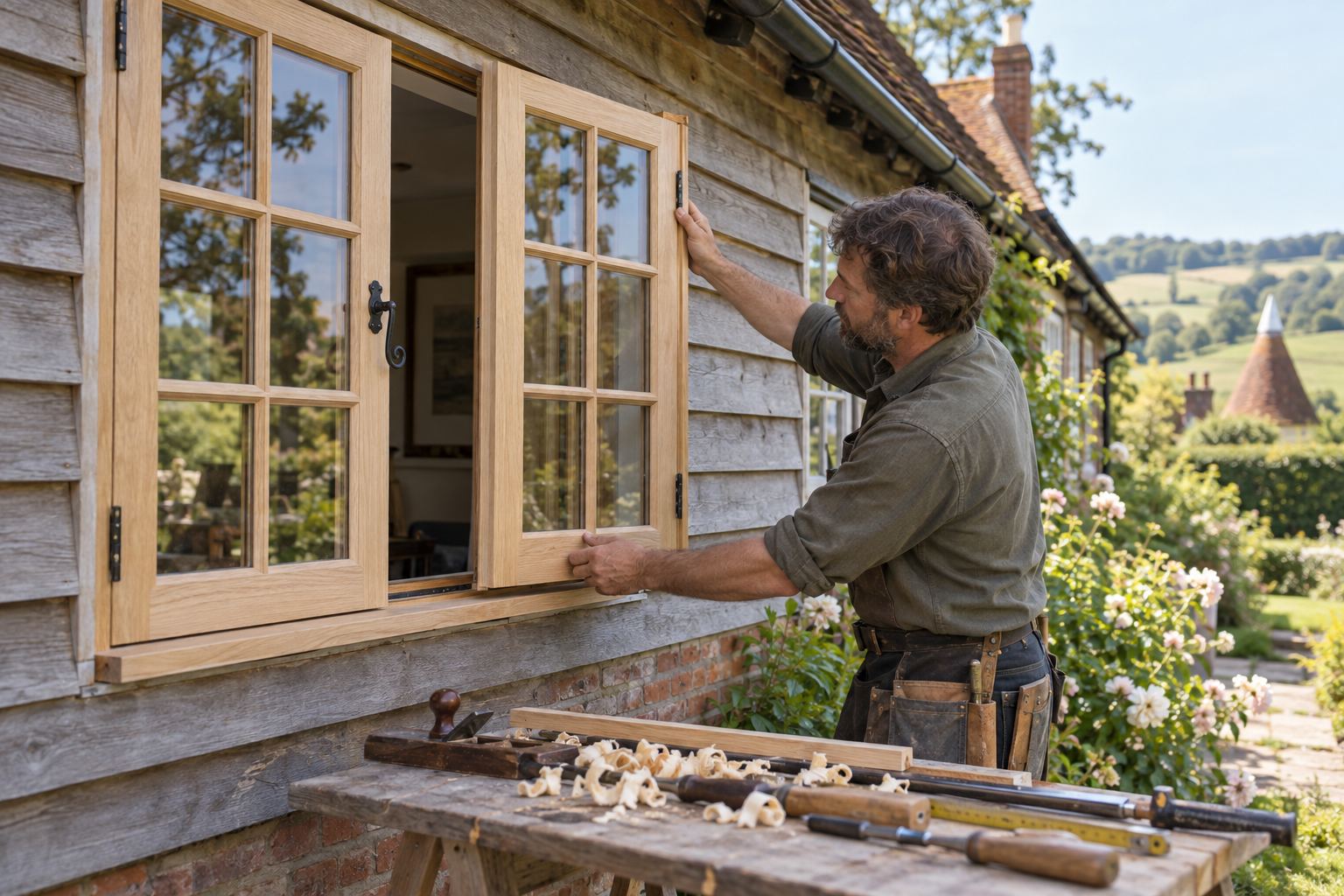
Today's cottage windows can be made in painted timber or in heritage-style uPVC, and the glazing bars can be genuine separate panes or bars bonded to the face of a single double glazed unit. The choice between those makes the biggest difference to both appearance and price.
Signs You Need New Cottage Windows
- Timber casements where the bottom rail or the joints of the glazing bars have gone soft
- Putty that has cracked and fallen away, letting water sit against the timber
- Previous replacements in plain uPVC that look out of place on a period cottage
- Casements that swell in wet weather and have to be forced shut
- Single-glazed small panes rattling in their rebates and letting heat escape
- Cottage windows set into weatherboarding or tile-hanging where rainwater is getting in around the frame
Cottage Window Options Explained
- Timber cottage casements. Painted softwood or hardwood frames with slim glazing bars. Best suited to listed and conservation-area properties and genuine period cottages.
- Heritage uPVC. uPVC profiles designed to mimic timber, often flush-sash with woodgrain foils and mechanical joints that look like timber joinery.
- Through-glass bars. Each pane is a separate sealed unit, with a true glazing bar between. The most authentic look, but the dearest and bulkiest when double glazed.
- Bonded bars. Bars fixed to the inside and outside faces of one sealed unit, often with a spacer bar in the cavity to complete the illusion. Much more economical and thermally better.
- Internal grids. Bars sealed inside the unit. The cheapest route to a small-paned look, but flat and less convincing on a period house.
What to Include When Asking for a Quote
Count the panes as well as the windows. Say how many panes each window has across and down, whether the bars are the same size throughout, and whether any windows have a different pattern, such as a larger lower pane. Note how thick the walls are, because deep ragstone or flint walls and timber-framed walls behind weatherboarding need very different fixing and finishing. If the openings are visibly out of square, say so: cottage frames often need to be made to fit, not squared up.
Tell the installer what the cottage is built from and how the window meets the wall outside: weatherboarding, tile-hanging, render, brick or stone. That junction is where rain gets in on many Weald cottages, and the quote should explain how it will be flashed and sealed. If the cottage is listed or in a conservation area, say whether you have already spoken to the council.
Ask each firm to state the bar type (through-glass, bonded or internal), the bar width, the frame material and finish, the glass specification and whether the frames come fully painted or need decorating after fitting. For timber, ask what species is used and the paint or stain system, and what maintenance the finish will need.
How Much Do Cottage Style Windows Cost?
| Job size | Typical cost |
|---|---|
| One small cottage casement in heritage uPVC | £400 – £900 |
| Front of a cottage, three to five windows with bonded bars | £2,500 – £5,000 |
| Whole cottage in painted timber with glazing bars | £5,000 – £8,500+ |
These are guide figures only. Through-glass bars, hardwood, listed-building detailing and difficult access all push costs toward and beyond the top of the range. Check whether decoration and VAT are included.
The Cottage Window Process: What to Expect
- Survey. The installer measures each opening at several points, notes wall construction and records the existing pane pattern.
- Design. Bar layout, bar type, frame profile and colour are agreed, often with drawings for consent if needed.
- Manufacture. Timber windows are made in a joinery workshop, uPVC frames by a fabricator, over several weeks.
- Fitting. The old frames are removed carefully to protect weatherboarding, tile-hanging or plaster, and the new frames packed to suit uneven openings.
- Weathering and finishing. Flashings or seals are fitted at the junction with the wall, internal reveals made good and timber decorated if included.
Planning Permission and Building Regulations
On an unlisted house outside an Article 4 area, replacing cottage windows with new ones of a similar appearance is usually permitted development. Many Kent villages, including much of Tenterden, Cranbrook and Biddenden, are conservation areas, and where an Article 4 direction applies, switching from timber to uPVC or changing the pane pattern may need permission. Listed cottages need listed building consent for most window changes. Historic England's guidance on caring for traditional windows explains the principles councils follow.
Replacement cottage windows must meet the Building Regulations for thermal performance and escape, which can be a challenge with small openings. Where an upstairs window is too small to meet escape requirements, the regulations generally ask that the replacement is no worse than the existing. A competent person scheme member can self-certify most replacements.
How to Choose a Cottage Window Specialist
- Do you make timber cottage windows yourself or buy them in?
- What type and width of glazing bar are you proposing, and can I see a sample?
- How will you deal with openings that are out of square?
- How will the new frames be sealed against weatherboarding, tile-hanging or stone?
- Have you worked on listed or conservation-area cottages in Kent?
- What will the finish need in maintenance, and how often?
Frequently Asked Questions
Are uPVC cottage windows acceptable on a period cottage?
On many unlisted cottages outside Article 4 areas, heritage-style uPVC with bonded bars is acceptable and popular. On listed cottages, and in some conservation areas, timber is usually required.
What is the difference between bonded and through-glass glazing bars?
Bonded bars are fixed to both faces of a single sealed unit, while through-glass bars divide the window into separate sealed units. Through-glass bars look more authentic but cost more and are usually wider.
Can cottage windows be fitted to walls that are not straight?
Yes. Installers measure at several points and either make the frame to suit the opening or pack and trim it on site so it sits neatly in an uneven wall.
How long do timber cottage windows last?
Well-made timber windows that are painted regularly can last many decades. Factory-finished frames with a microporous coating often need redecorating every six to ten years.